




What Does ESFJ Stand For?
ESFJ stands for Extraverted, Sensing, Feeling, and Judging. People with this personality type tend to be social, talkative, and empathetic, preferring to avoid conflict wherever possible. Both in their personal life and at work, they actively look out for others, offering help and support. They keep a close check on the people around them and take genuine care to understand their needs and wants — which is why ESFJs are often known as ‘The Caregiver’.
What MBTI Is Compatible With ESFJ?
ESFJs enjoy interacting with people and are naturally strong communicators, energetic and drawing their energy from the outside world. These ‘Consuls’ place real value on others and go out of their way to make them feel comfortable. They pair best with ISFP: contrasting extraverted and introverted natures that complement each other well, letting them enjoy time together while thinking along similar lines. Other potential partners for ESFJs include INTP, INFP, and ISTP.
Is ESFJ a Rare Personality?
The caregiver nature of the ESFJ personality is exactly what the world needs most right now. They lean on their strong sensing and feeling traits to sense a situation and find the right way to respond. Fortunately, data shows ESFJs make up about 12% of the world's population.
That means there's a real abundance of people who think and feel the same way — sharing the same psychological preference makes it easier to settle into a work environment or handle life's challenges.
Key Traits of ESFJ Personality
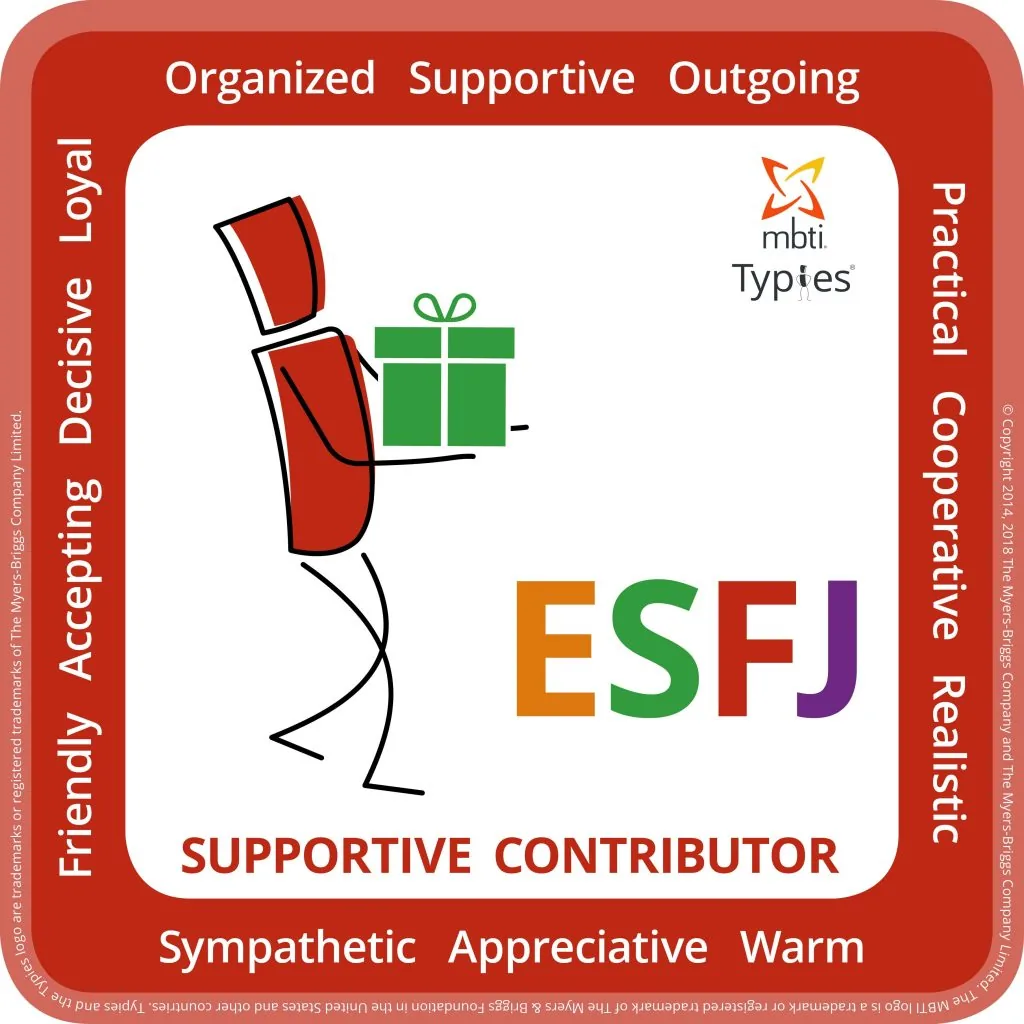
The caregiver in ESFJs puts others ahead of themselves in relationships. They function best in a team and take a practical view of life, always wanting to bring everyone along and bring out the best in them. Other key traits ESFJs carry include:
- Loyal
- Organised
- Outgoing
- Generous
- Compassionate
Why Are ESFJs So Popular?
ESFJ is the life of any social gathering and a real people person, with a strong sense of understanding and rock-solid support to offer others. They'd rather work around people than alone, and they value relationships enough to go out of their way to help. That said, they want to be appreciated and can be disheartened by an unkind response — ESFJ always feels the pull of approval. They're also super organised and well-planned, and quick to find a way through in any unfortunate circumstance, promptly doing whatever needs to be done. These qualities are what make ESFJ the best at work and in their careers, while also helping them build strong relationships with friends and the people around them.
Strengths of ESFJ Personalities
ESFJs pay close attention to detail. To dodge the last-minute scramble, they plan things ahead of time and stay organised throughout a task. They're skilled at building relationships, engaging with people, and working within a team that promotes support and harmony. A person with an ESFJ personality is practical in approach and genuinely dependable. Kind by nature, they rarely suspect the worst of the people around them.
Weaknesses of ESFJ Personalities
Alongside their many strengths, ESFJs carry a few weaknesses too. They tend to resist change at work, since the dominant trait in their personality craves control over everything around them, and they always seek approval, finding it hard to welcome criticism with an open mind.
Careers for ESFJ
Choosing a career can be a genuinely tricky decision. MBTI results help you understand your psychological approach and decide on a career that fits your personality type — and since ESFJs thrive on support, harmony, and a friendly environment, careers in teaching, nursing, mentoring, and childcare suit them particularly well.
ESFJ's Cognitive Functions
How well someone performs an assigned role, or handles their relationships with others, comes down largely to these functions — the driving force behind how each of us perceives the world and manages our personal affairs. The four cognitive functions of ESFJ are as follows:
Extroverted Feeling: the dominant function in an ESFJ. They typically weigh how their decisions affect other people, and being the epitome of warmth, they hold real affection for those around them. Rational and practical in their thinking, their decisions still tend to be driven by emotion.
Introverted Sensing: the auxiliary function supporting the dominant trait. ESFJs are quick to gather information and focus on the small details, wanting to move carefully, one step at a time, to avoid any negative consequences. Highly focused on the task at hand, they always look for concrete ideas and specifics.
Extroverted Intuition: ESFJs are strongly drawn to finding possibilities in every situation, coming up with innovative solutions to even the toughest problems. They're often quick to spot patterns in the information in front of them and connect the dots.
Introverted Thinking: the weakest function ESFJs need to work on. They're not fans of rapid change and prefer to keep the process organised, generally sticking to the complex information they've already absorbed rather than reaching for spontaneous solutions or abstract ideas.
These selfless people hold strong core values and expect others to live by them too. Good with people and quick to offer support, they're not afraid to speak up when something unfair is happening around them — vocal about their ideas, and firm once they've made up their mind.
- ENFJ | Presentation of the Protagonist | MBTI Profile
- ENTJ | presentation of the Commander | MBTI profile
- ENTP | presentation of the Debater | MBTI profile
- ESFP | Presentation of the Entertainer | MBTI profile
- ESTJ | presentation of the Executive | MBTI profile
- ESTP | Presentation of the Entrepreneur | MBTI profile
- INFJ | Presentation of the advocate | MBTI profile
- INFP | presentation of the Mediator | MBTI profile
- INTJ | presentation of the Architect | MBTI profile
- INTP | presentation of the Logician | MBTI profile
- ISFJ | presentation of the Defender | MBTI profile
- ISFP | presentation of the Adventurer | MBTI profile
- ISTP | presentation of the Virtuoso | MBTI profile
- ISTJ | Presentation of the Logistician | MBTI profile
- ENFP | presentation of the Campaigner | MBTI profile
This article was written by Marc Prager.